

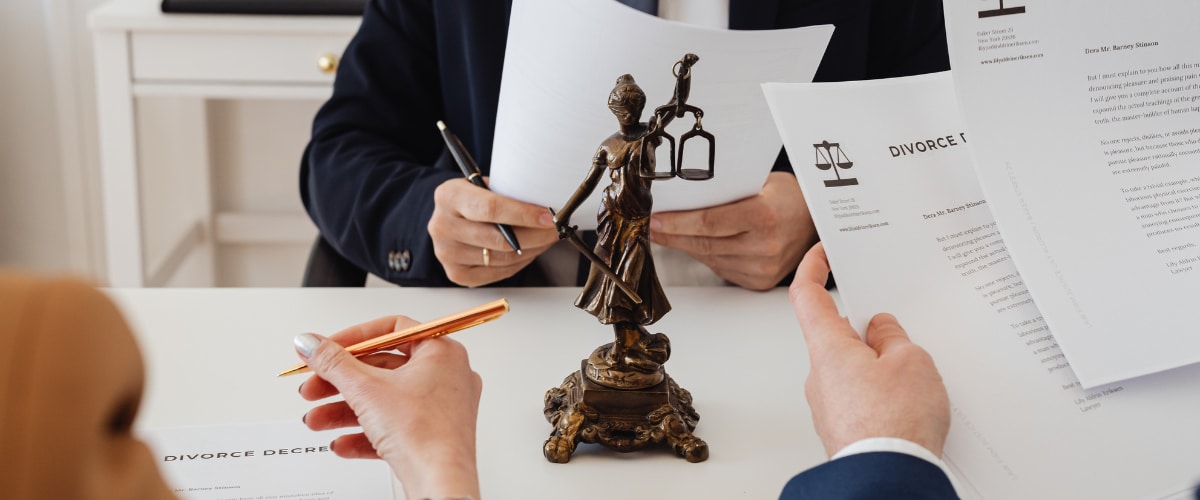
Yes, but only in limited situations and under specific requirements. Divorce in Florida can sometimes be finalized without traditional courtroom litigation, but that doesn’t mean you avoid the legal system entirely. You must still follow Florida law, meet residency requirements, complete legal paperwork, and, depending on your case, appear before a judge, even if only briefly. Florida offers Simplified Dissolution of Marriage and Uncontested Divorce options that minimize court conflict, time, and cost when both spouses agree on all major issues. Many couples first explore divorce mediation to resolve disagreements before filing. If mediation is successful and both spouses agree on all terms, the case can proceed without a courtroom battle.
In this blog, we’ll explain your options clearly, answering the exact questions people ask about general family law in Springfield, so you get informed.
“Divorce without court in Florida” generally refers to ending your marriage without lengthy litigation or multiple court appearances. In Florida, this is possible when spouses:
Important Note: Even in streamlined cases, the divorce is still processed by Florida courts; you just avoid traditional trial-style proceedings.
This is Florida’s most streamlined divorce process. It lets couples end their marriage quickly and without typical litigation, but only if strict requirements are met, including:
In this scenario, you typically file a joint Petition for Simplified Dissolution of Marriage, satisfy paperwork requirements, pay filing fees, and attend a short hearing with a judge who will finalize your divorce.
Best for: Spouses with simple financial situations and no children.
Key benefit: Quicker and less expensive than contested cases.
Even if you have children or more complex finances, you may qualify for an uncontested divorce in Florida, which still avoids courtroom conflict if:
In many counties, if the paperwork is complete and correct, the judge may not require a traditional hearing, or it could be very brief. Understanding uncontested vs contested divorce in Florida is important. In an uncontested divorce, both spouses agree on all issues. In a contested divorce, disagreements require court hearings or trial. To qualify for a divorce without court in Florida, the case must remain uncontested.
Best for: Couples who communicate well and can settle terms cooperatively.
This option is also commonly used in cases involving military divorce in Panama City Beach, where service members and spouses agree on terms and want to avoid extended litigation while navigating residency and deployment considerations.
Yes, but usually only once and briefly, even in uncontested or simplified cases. A final appearance before a judge is standard practice to ensure legal requirements are met, and your divorce decree is issued.
In simplified divorce scenarios, both spouses often must be present for the final hearing.
For uncontested divorces, some courts allow filing and review without a formal hearing if all forms are correct and there are compliant parenting plans (if applicable).
Bottom Line:
You might avoid long courtroom battles, but the legal system still needs to approve your divorce, so some court involvement is normal.
Before any divorce, even a simplified one, Florida law requires:
These requirements apply to all forms of divorce, whether you pursue simplified, uncontested, or contested dissolution.
Timeframes vary:
Note: Florida courts require a 20-day waiting period between filing and final judgment.
No, you can pursue both uncontested and simplified divorces without an attorney. However, legal advice ensures your rights and interests are protected, especially when:
For example, if support payments become a concern later, issues involving alimony, Callaway may require experienced legal guidance to ensure agreements are fair and enforceable.
At Justin Anderson P.A., we provide clear family law support, including uncontested divorce in Panama City, ensuring your rights are protected throughout the process.
Yes, if both spouses agree on a detailed parenting plan covering custody, time-sharing, decisions, and support, and all paperwork is filed correctly. A judge must still review it, but the process can remain uncontested and streamlined.
Yes, Florida requires several forms, including a Petition for Dissolution of Marriage, financial affidavits, marital settlement agreement, and, if children are involved, parenting plan documents.
An attorney helps you:
Even in simplified or uncontested cases, professional guidance on no court divorce in Florida reduces mistakes that could delay your divorce.
You can get divorced in Florida without the traditional courtroom battle, but you still navigate the legal system. Florida’s simplified and uncontested divorce options exist to minimize conflict, reduce costs, and expedite proceedings, especially when both spouses collaborate and fully agree on terms.
If your situation is straightforward, uncontested, or qualifies for a simplified dissolution, working with an experienced family law attorney can help you avoid unnecessary court conflict while protecting your legal rights.
If you and your spouse agree on the terms, you may qualify for a simplified or uncontested divorce in Florida. The team at Justin Anderson P.A. can guide you through the process, ensure your paperwork is correct, and help you move forward with clarity and confidence. Contact us today to discuss your situation, whether you are looking for an uncontested divorce or child custody in Lynn Haven.

Disclaimer: The information on this site is not legal advice and does not create an attorney-client relationship. Past results do not guarantee future outcomes. Justin Andersson is not board certified in marital and family law by The Florida Bar. For full details, please see our Legal Disclaimer page or email info@850DivorceLawyer.com to request a copy.
Copyright © 2026 Justin Andersson PA I All Rights Reserved I Disclaimer I Privacy Policy I Terms of Use I Designed by Aaron Rich Marketing
