
Child Custody
Child Custody in Northwest Florida
Florida Doesn’t Use the Word "Custody" Anymore
But the responsibility and the emotional weight remain the same. Your children matter most. We protect your role, with clarity, strategy, and a steady hand. Florida courts now focus on:
- Parental responsibility (decision-making authority)
- Timesharing (physical time spent with the child)
Whether you’re going through divorce, establishing paternity, or modifying an old parenting plan, we help you build a path that protects your relationship with your children, and prioritizes their well-being.

What Courts Look for in Parenting Plans
Florida Custody Basics: What the Court Looks At
Under Florida Statute Section 61.13, courts must create a parenting arrangement that serves the best interests of the child, not the parents’ convenience or preferences. Since July 1, 2023, Florida law also presumes that equal time-sharing is in the child’s best interests; a parent who wants a different schedule must prove that equal time-sharing is not in the child’s best interests.
Key factors include:
- Each parent's ability to foster a close relationship with the child
- Consistency, stability, and routine
- School performance, medical needs, and emotional development
- History of domestic violence, substance abuse, or neglect
- Geographic logistics (especially post-divorce or military relocation)
- Mental and physical health of each parent
- In some cases, the child’s reasonable preference
Florida law does not favor mothers or fathers: once both parents are legal parents, the court applies the same best-interests factors to each, and the focus is on parenting, not gender. (For unmarried parents, paternity must be legally established first.)

Parenting Plans That Fit
Types of Custody Arrangements
Shared Parental Responsibility
This is the default in Florida. Both parents share decision-making unless the court finds that shared parental responsibility would be detrimental to the child.
Sole Parental Responsibility
Granted only if the court finds that shared parental responsibility would be detrimental to the child (for example, because of domestic violence, abuse, or neglect) or that sole responsibility is in the child’s best interests. One parent handles all major decisions (education, healthcare, religion, etc.).
Timesharing (Physical Custody)
Can be structured as:
- Majority timesharing (the child spends most overnights with one parent)
- Equal timesharing (50/50 schedule, which Florida law presumes is in the child's best interests unless a parent proves otherwise)
- Supervised timesharing (if safety or stability is a concern)
We create parenting plans that are detailed, realistic, and customized to your family’s needs, including holidays, school breaks, transportation, and virtual contact.
Custody Representation You Can Count On
What We Do for You
- Help you understand your rights and risks
- Draft a complete Parenting Plan that complies with Florida law
- Negotiate from strength in mediation
- Present a compelling case in court if needed
- Modify existing orders when life circumstances change
- Represent military and long-distance parents with flexible scheduling

Protecting Kids. Resolving Conflict.
Common Child Custody Issues We Handle
- Timesharing disputes
- Relocation (moving 50+ miles away)
- Emergency custody due to instability or danger
- Denial of visitation
- Allegations of parental alienation
- Disputes over school, religion, or medical care
- Coordination with Guardian ad Litem or parenting coordinators
Child Custody Service Locations
We provide trusted child custody legal services throughout Bay County, including:


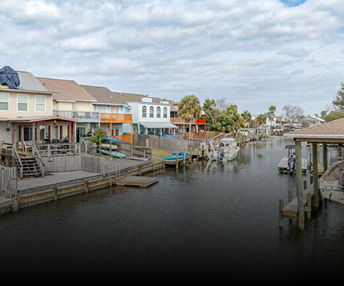





Whether you are establishing custody, modifying an existing order, or resolving parenting time disputes, we focus on protecting your parental rights and your child’s best interests while guiding you through the process clearly and effectively.
Who We Serve
Proudly Representing Families Throughout the Florida Panhandle
From the coast to the Wiregrass line, we provide trusted legal representation in:
Surrounding Areas
- Jackson County
- Marianna
- Graceville
- Sneads
- Gulf County
- Port St. Joe
- Wewahitchka
- Calhoun County
- Blountstown
- Altha
- Washington County
- Chipley
- Vernon
- Holmes County
- Bonifay
- Ponce de Leon
Wider Northwest
Florida & Panhandle Region
- Walton County
- Defuniak Springs
- Freeport
- Santa Rosa Beach
- Okaloosa County
- Fort Walton Beach
- Crestview
- Niceville
- Santa Rosa County
- Milton
- Navarre
- Escambia County
- Pensacola
- Cantonment
- Gulf Breeze
Whether you live in Panama City or commute in from across the Panhandle, we offer virtual consultations, flexible scheduling, and personalized legal support from a team that understands Northwest Florida values.
Dedicated to Your Future
WHY CHOOSE JUSTIN ANDERSSON, P.A.?
- Clarity, Strategy, and Real Guidance
- Focused on Divorce & Family Law
- Honest Communication
- Personalized Support
See What Our Clients Say
Honest Feedback From Those We’ve Represented
DON MCCOY
Liane Blake
Although I have not needed a divorce, I have utilized other legal services that Justin assisted me with. He was professional, knowledgeable, and easy to work with. He explained everything clearly and made the process smooth and stress-free. Based on my experience, I would confidently recommend Justin to anyone in need of legal support, including all family law matters.
Carmen Argueta Yacaman
I can’t say enough good things about Justin. From the very first meeting, I felt heard, respected, and supported. And Laramie the office manager he is just so caring that makes you feel like part of the family. 🙏Justin and his team went above and beyond for me during a difficult point in my life. They were responsive, compassionate, and truly fought for my best interest.💪 If you need an attorney who actually cares — this is the place. Highly recommend!
Florida Divorce FAQ
Frequently Asked Questions
In Florida the familiar term “custody” has been replaced by two main concepts: parental responsibility (decision-making authority regarding a child’s health, education, religion, etc.) and time-sharing (the schedule of how much time the child spends with each parent). Courts generally order shared parental responsibility unless doing so would be harmful to the child.
Florida courts focus on the best interests of the child and consider many factors such as: each parent’s mental & physical health, the child’s home/stability, each parent’s ability to provide for the child’s needs, continuity of the child’s environment, how long the child has lived in a stable setting, any history of abuse or neglect, and the child’s preferences (if mature enough) among others.
There is no fixed age at which a child can choose where to live. If the child is mature enough and it's appropriate, the court may consider the child's preference, but it is only one of many factors in the best-interest analysis, not determinative on its own.
Yes. A modification is possible if there has been a substantial and material change in circumstances and the modification is in the child's best interests. If either your situation or the child's situation has changed significantly (job change, relocation, health issue, etc.), you may ask the court for a modification.
Florida is subject to the Uniform Child Custody Jurisdiction and Enforcement Act (UCCJEA). If the child has lived in Florida for 6 months (or since birth if younger) and the case meets Florida's jurisdictional standards, a Florida court can claim jurisdiction. Once a Florida court has entered a custody order, it generally keeps exclusive, continuing jurisdiction until a Florida court finds that the child and the parents no longer have a significant connection with Florida and that substantial evidence about the child is no longer available here, or a court finds that the child and both parents no longer live in Florida.
If a parent has a history of domestic violence, child abuse, neglect, substance abuse, or other issues that affect the child's welfare, the court may decide that shared parental responsibility or equal time-sharing is not appropriate. A parent's conviction of a first-degree misdemeanor or higher involving domestic violence creates a rebuttable presumption that shared parental responsibility would be detrimental to the child, and if the court accepts evidence of prior or pending domestic violence or abuse cases, it must say in writing that it considered that evidence. The court may order supervised visitation, limit decision-making authority, or award one parent sole parental responsibility in major decisions.
Under certain limited circumstances, yes, especially if a parent is unavailable (such as military deployment) or unable to care for the child. However, grandparents do not have an automatic right to take over the other parent's role. Legal advice is important in these situations.
Even when both parents agree on a parenting plan, the agreement must be reviewed by the court and incorporated into a court order to make it enforceable. Courts will check that the plan is in the child's best interests. Having a lawyer review the plan helps confirm it meets Florida's legal standards.
Communication is vital. Courts look for parents who can cooperate and keep the focus on the child. A parent's willingness to encourage the child's relationship with the other parent and to communicate about the child's activities and needs can carry weight in the court's evaluation.
Relocation is a complex issue. If you plan to move your principal residence at least 50 miles away for at least 60 consecutive days, you generally need either a written agreement signed by the other parent (approved by the court if there is a case or order) or court permission through a sworn petition to relocate. Relocation without addressing the court order or the other parent's rights can lead to enforcement or modification proceedings.
Ready to take the next step?
Schedule a Consultation
Use the form to get in touch. Send a message, and let’s discuss how I can support you through your legal matter.
PHONE
Want clear answers now? Get the free guide I wrote to help clients like you navigate divorce in the 850.