
Military Divorce Attorney in Panama City, Florida
Military Divorce Representation in Panama City
Panama City is home to two major military installations — Tyndall Air Force Base and Naval Support Activity Panama City. Divorce involving military families often requires applying Florida family law alongside federal statutes and military regulations, creating legal issues that don’t arise in civilian divorces. Overlooking one requirement can affect retirement division, survivor benefits, or support enforcement.
Justin Andersson, P.A. represents service members, veterans, and military spouses throughout Panama City and Bay County. Justin Andersson is a Florida-licensed attorney (Bar No. 1064361), a graduate of Loyola University New Orleans College of Law, with a Master’s degree in Strategic Communication from the University of West Florida. Justin Andersson practices exclusively in Florida family law.

What Makes Military Divorce Different in Panama City?
A military divorce follows Florida family law but adds federal rules on top of it — jurisdiction, active-duty protections, and how retirement and survivor benefits get divided. Common issues include:
- Where to file when spouses are stationed or living apart
- SCRA protections for active-duty service members
- Dividing military retirement, TSP, and Survivor Benefit Plan (SBP) coverage
- Parenting schedules built around deployment and PCS orders
Military retirement follows the Uniformed Services Former Spouses’ Protection Act (USFSPA). Florida courts may divide military retired pay regardless of the length of the marriage, although eligibility for direct payment from DFAS depends on federal requirements — generally, at least 10 years of marriage overlapping with 10 years of service. Below that threshold, the pension can still be divided, but the service member pays the former spouse directly. If SBP coverage is awarded, there’s a one-year deadline from the divorce decree to secure it; miss it, and the protection is gone for good. The TSP is separate from the pension and needs its own Retirement Benefits Court Order (RBCO).
See: Military Divorce in Florida: What Makes It Different? | Military Divorce in Florida: Benefits, Pensions, and Jurisdiction
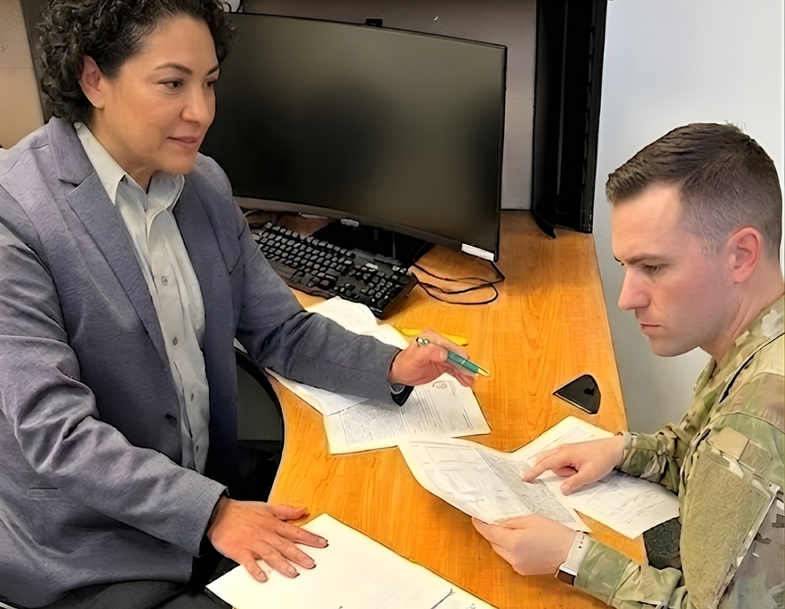
Filing in Florida When One Spouse Is in the Military
Florida may have jurisdiction depending on residency, legal domicile, and the circumstances of the parties — including whether the service member claims Florida as legal residence or the spouse lives in Florida. This flexibility matters for families connected to Tyndall AFB or NSA Panama City who may be stationed elsewhere but retain legal ties here, and it can spare a family from filing across multiple states while orders change.
See: Filing for Divorce in Florida While Living in Different Cities or States
How Much of a Service Member's Pay Can Go to Support?
Federal law sets different maximum withholding limits for child support or alimony depending on the family’s circumstances. A member providing over half the support for other dependents is capped lower (50–55% of disposable earnings); otherwise the cap runs higher (60–65%), with the higher end applying when payments are in arrears. Getting this calculation right the first time avoids disputes and enforcement headaches later.

How Do You Protect Active-Duty Service Members During Divorce?
The Servicemembers Civil Relief Act (SCRA) may allow a stay of proceedings when military duties materially affect the service member’s ability to appear. It’s not automatic — a court decides the length based on the specific circumstances — but it provides an important procedural safeguard when military service materially affects a party’s ability to participate.
- Identify when service affects court participation
- Ensure proper notice and timing
- Keep cases moving without putting your rights at risk
This balance is where experienced military divorce legal guidance truly matters.
How Our Firm Handles Military Divorce Cases
While every military divorce is different, our approach follows a clear and organized path designed to reduce stress and prevent delays:
01
Case Review
We review your military status, duty station, deployment considerations, and family situation to understand the full scope of your case.
02
Issue Identification
Military-specific issues such as benefits, pensions, deployments, and jurisdiction are identified early to prevent delays.
03
Legal Strategy Development
A tailored legal approach is developed to address military timelines, federal protections, and Florida family law requirements.
04
Document Preparation
All agreements and court filings are prepared accurately to comply with Florida family law and applicable military regulations.
05
Court Coordination
We handle filings with the local court, manage deadlines, and address procedural requirements related to military service.
06
Resolution
The case is guided toward a clear, enforceable outcome that protects your rights and supports long-term stability.
This structured approach helps avoid common issues that slow military divorce cases down and create unnecessary stress.

How Is Child Support Calculated for Service Members?
Military pay includes more than base pay — allowances like BAH may be included depending on Florida child support guidelines and the specific allowance, and leaving them out can understate real income. Leave and Earnings Statements (LES) help document military compensation accurately when calculating support.

Why Do Military Families Choose Justin Andersson, P.A.?
Clients choose our family lawyers because we offer:
- Focused military divorce representation
- Clear explanations in plain English
- Familiarity with Bay County courts
- Flat-rate pricing with no hourly billing
- Respectful handling of sensitive family matters
Justin Andersson is a Florida-licensed attorney (Florida Bar No. 1064361) and a graduate of Loyola University New Orleans College of Law. Our firm focuses on clear, compliant solutions for families navigating divorce where military service is part of the picture, including those stationed near Tyndall AFB legal office.

What Are Common Mistakes Military Families Should Avoid?
Some of the most common problems we see include:
- Failing to address survivor benefits during divorce
- Waiting too long to submit retirement-related paperwork
- Assuming deployments automatically change custody rights
- Missing deadlines while overseas
Early planning helps protect both your future and your peace of mind.
Where Panama City Military Divorce Cases Are Filed
Cases are filed at the Bay County Circuit Court, Family Law Division, 300 E. 4th Street, Panama City — located conveniently near our office at 435 Oak Ave, near downtown and Historic St. Andrews.
Common Mistakes to Avoid
Some of the most costly military divorce mistakes involve missed deadlines, incomplete retirement orders, or incorrect assumptions about deployment and custody. Also common: forgetting the TSP needs its own court order, and missing deadlines while stationed overseas.
Frequently Asked Questions
Yes, military divorces involve federal rules and military benefits, so working with a lawyer familiar with these issues helps avoid costly mistakes.
In many cases, yes — based on legal residence, your spouse's location, or prior ties to Florida.
Military retirement may be divided under Florida law, but it must be handled carefully to ensure the court orders are valid and enforceable.
Parenting plans can include deployment provisions and virtual visitation — Florida law also protects a deployed parent's right to restore their prior schedule on return.
Deployment doesn't stop a divorce from being filed or from moving forward. The SCRA allows an active-duty spouse to request a stay of proceedings if military duties materially affect their ability to participate, but that's a request the court evaluates — it's discretionary, not automatic, and it applies to specific proceedings rather than pausing the entire case indefinitely. A case can still be filed, served, and partially processed during deployment; what changes is the timeline for the deployed spouse's participation, not whether the divorce can begin.
Yes — the federal protections and pension rules apply the same way regardless of which base or branch is involved.
Our firm provides clear military divorce guidance, local court experience, and flat-rate pricing to help families move forward with confidence.
Related Services & Further Reading
Ready to take the next step?
Schedule a Consultation
Use the form to get in touch. Send a message, and let’s discuss how I can support you through your legal matter.
PHONE
LOCATION
Want clear answers now? Get the free guide I wrote to help clients like you navigate divorce in the 850.