
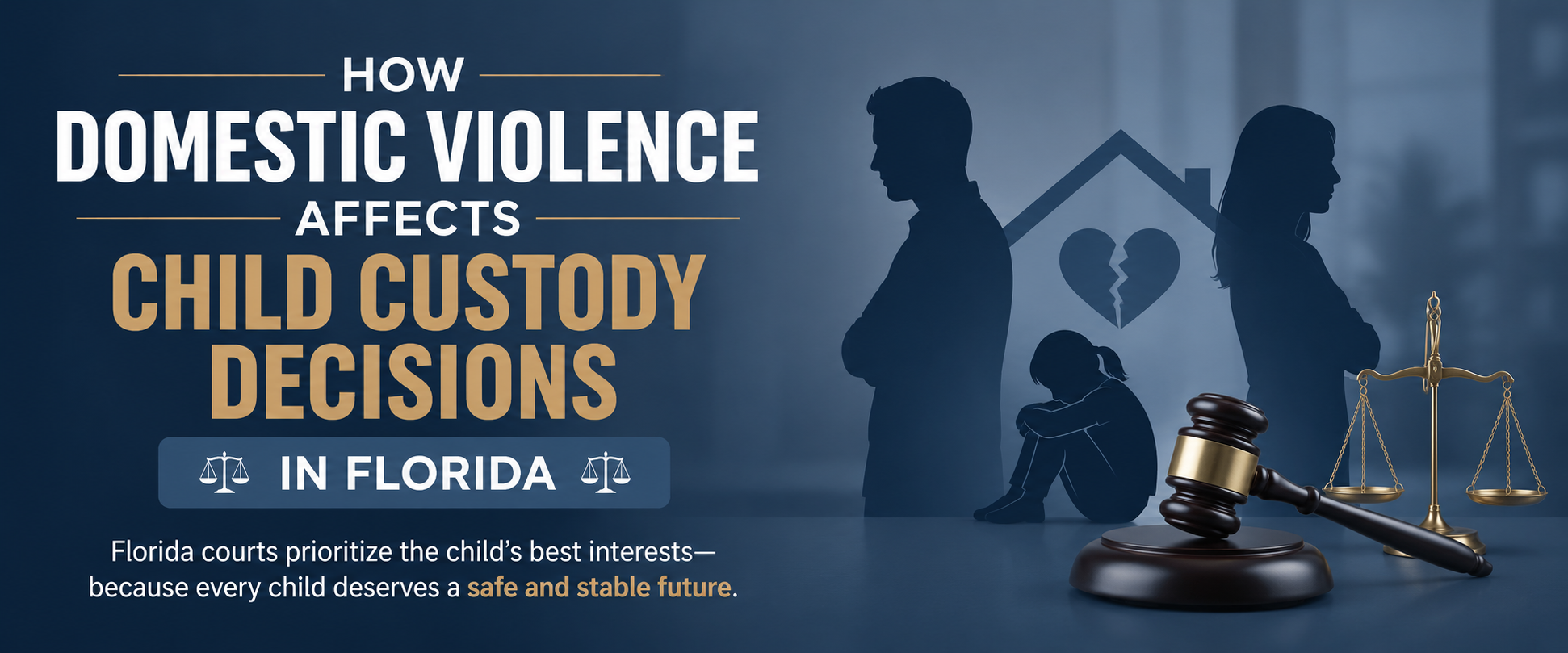
If you are wondering whether domestic violence can affect child custody decisions in Florida, the answer is yes. Florida courts are required to consider evidence of domestic violence when determining parental responsibility and time-sharing because the child’s safety and best interests always come first.
A history of domestic violence does not automatically end a parent’s rights, but it can significantly impact custody arrangements, decision-making authority, visitation schedules, and even whether supervised visitation is required. If you are facing a custody dispute involving allegations or evidence of abuse, understanding how Florida courts evaluate these situations can help you protect your rights and your child’s well-being.
Domestic violence and child custody cases are often emotionally charged and legally complex. Whether you are seeking protection for your child or defending against allegations, having clear legal guidance from an expert child custody attorney in Panama City Beach can make a significant difference in the outcome of your case.
What Do Florida Courts Consider When Domestic Violence Is Alleged in a Custody Case?
When Florida courts make child custody decisions, they focus on one standard above all others: the best interests of the child. Domestic violence is one of the most important factors judges evaluate when determining parental responsibility and time-sharing arrangements.
Florida judges may review:
- Police reports
- Domestic violence injunctions
- Medical records
- Witness testimony
- Photographs of injuries
- Text messages, emails, or other communications
- Prior criminal convictions
- Evidence of threats, stalking, or harassment
- Child Protective Services reports
The court’s goal is not to punish a parent. Instead, it seeks to determine whether the child’s physical, emotional, and psychological well-being could be affected by the parent’s conduct.
Can Domestic Violence Affect Custody Even If the Child Was Not Directly Harmed?
Many parents assume that domestic violence only matters if the child was physically abused. That is not necessarily true.
Florida courts recognize that children can suffer significant emotional harm from witnessing violence between parents or other household members. Exposure to domestic violence can affect a child’s sense of safety, emotional development, and overall well-being.
Some examples include:
- Witnessing physical altercations
- Hearing threats or intimidation
- Seeing property destruction
- Living in a household marked by fear and instability
- Being exposed to repeated verbal abuse
Judges understand that a child does not need to be the direct victim of violence to experience negative consequences from it.
How Does Domestic Violence Impact Parental Responsibility in Florida?
Florida no longer uses the traditional term “custody.” Instead, courts focus on parental responsibility and time-sharing.
When domestic violence is proven, a judge may decide that shared parental responsibility is not appropriate.
Possible outcomes include:
- Sole parental responsibility awarded to one parent
- Restrictions on decision-making authority
- Court-ordered parenting classes
- Mental health evaluations
- Substance abuse treatment requirements
- Additional court monitoring
In serious situations, the court may determine that allowing both parents to make major decisions together would place the child at risk.
This is one reason why parents involved in domestic violence child custody Florida cases often need experienced legal representation to present evidence effectively and protect their interests.
Can Domestic Violence Lead to Supervised Visitation?
In many cases, courts want children to maintain a relationship with both parents whenever it is safe to do so.
However, when safety concerns exist, judges may order supervised visitation.
Supervised visitation may involve:
- Visits monitored by a professional supervisor
- Supervision by an approved family member
- Visits at designated visitation centers
- Limited duration visitation schedules
- Restrictions on overnight visits
The purpose is to balance the child’s safety with the child’s relationship with the parent.
Every case is different, and courts evaluate the specific facts before imposing restrictions, so working with an experienced Callaway, FL child custody lawyer can help parents navigate complex custody issues and advocate for their child’s best interests.
What Evidence Helps Prove Domestic Violence in a Florida Custody Case?
Strong evidence often plays a major role in custody disputes involving domestic violence.
Courts may consider:
Official Documentation
Two important forms of evidence often come from law enforcement and the courts. These records can help establish a documented history of abuse.
- Police reports
- Arrest records
- Criminal convictions
- Domestic violence injunctions
Medical and Professional Records
Healthcare providers and counselors can sometimes provide evidence that supports claims of abuse or its effects.
- Emergency room records
- Physician reports
- Counseling records
- Mental health evaluations
Digital and Personal Evidence
Modern custody cases frequently involve electronic communications and digital evidence.
- Text messages
- Emails
- Voicemails
- Social media messages
- Photographs
- Videos
Witness Testimony
Independent witnesses can sometimes provide valuable insight into incidents of abuse.
- Family members
- Friends
- Neighbors
- Teachers
- Counselors
- Law enforcement officers
The more credible and organized the evidence, the stronger the case may be before the court.
What Happens If Someone Makes False Domestic Violence Allegations?
False allegations can create serious legal and emotional consequences for everyone involved.
Florida judges take allegations seriously, but they also carefully examine evidence before making decisions.
If a court determines that allegations were intentionally fabricated, it may consider:
- The credibility of the accusing parent
- The impact on the child’s relationship with the other parent
- Attempts to interfere with time-sharing
- Bad-faith litigation conduct
Parents should avoid making accusations without supporting evidence and focus on presenting truthful, documented facts.
How Does Domestic Violence Affect Time-Sharing in Florida?
Time-sharing decisions depend on the specific circumstances of each case.
A history of domestic violence may result in:
- Reduced parenting time
- Supervised visitation
- Temporary suspension of visitation
- Exchange restrictions
- Parenting plan modifications
- Protective conditions imposed by the court
The court’s primary concern remains the child’s safety and long-term stability.
In difficult situations, a parent may receive significantly less time-sharing if the court believes unrestricted contact could place the child at risk.
Can a Parent Regain More Parenting Rights After Domestic Violence Issues?
Some parents successfully rebuild trust and improve their legal position over time.
Courts may consider positive changes such as:
- Completion of batterer intervention programs
- Anger management courses
- Counseling or therapy
- Compliance with court orders
- Long-term behavioral improvements
- Demonstrated commitment to the child’s well-being
A parent seeking modifications must usually show substantial changes in circumstances and demonstrate that increased parenting rights would serve the child’s best interests.
How Do Child Custody Laws in Florida Address Domestic Violence?
Florida child custody laws require judges to consider domestic violence when determining parental responsibility and time-sharing arrangements.
Key principles include:
- The child’s best interests come first.
- Courts prioritize safety and stability.
- Evidence matters more than accusations alone.
- Domestic violence can affect decision-making authority.
- Time-sharing may be restricted when necessary.
- Supervised visitation may be ordered to protect children.
Whether the matter arises during a domestic violence divorce in Florida proceedings or a separate parenting dispute, understanding child custody laws can help parents better protect their rights and their children’s well-being.
When Should You Speak With a Child Custody Lawyer?
Domestic violence allegations can significantly impact the outcome of a custody case. Whether you are seeking protection for your child or responding to accusations, early legal guidance is often critical.
You should consider speaking with a lawyer if:
- Domestic violence has occurred in your household.
- A protective injunction has been filed.
- Your parental rights are being challenged.
- You are concerned about your child’s safety.
- You need to modify an existing parenting plan.
- You are preparing for mediation or court proceedings.
An experienced child custody lawyer in Panama City can help you understand your options, gather evidence, and present a strong case focused on your child’s best interests.
Frequently Asked Questions About Domestic Violence and Child Custody in Florida
Final Thoughts
Domestic violence and child custody cases in Florida are among the most sensitive matters handled in family court. Florida judges carefully evaluate evidence of abuse because protecting children is their highest priority.
Whether domestic violence involves physical harm, threats, intimidation, or a pattern of controlling behavior, it can significantly influence parental responsibility and time-sharing decisions. If you are facing a custody dispute involving domestic violence, obtaining experienced legal guidance early can help you understand your options and work toward a resolution that protects your child and your future.
Need Legal Help With a Domestic Violence and Child Custody Case?
Domestic violence allegations can significantly impact child custody and time-sharing decisions in Florida. Whether you are protecting your child or defending your parental rights, experienced legal guidance can help you navigate the process with confidence.
Contact Justin Andersson, P.A., your experienced child custody lawyer in Lynn Haven, today to schedule a confidential consultation and discuss your options.